
Resources, Tools, Worksheets
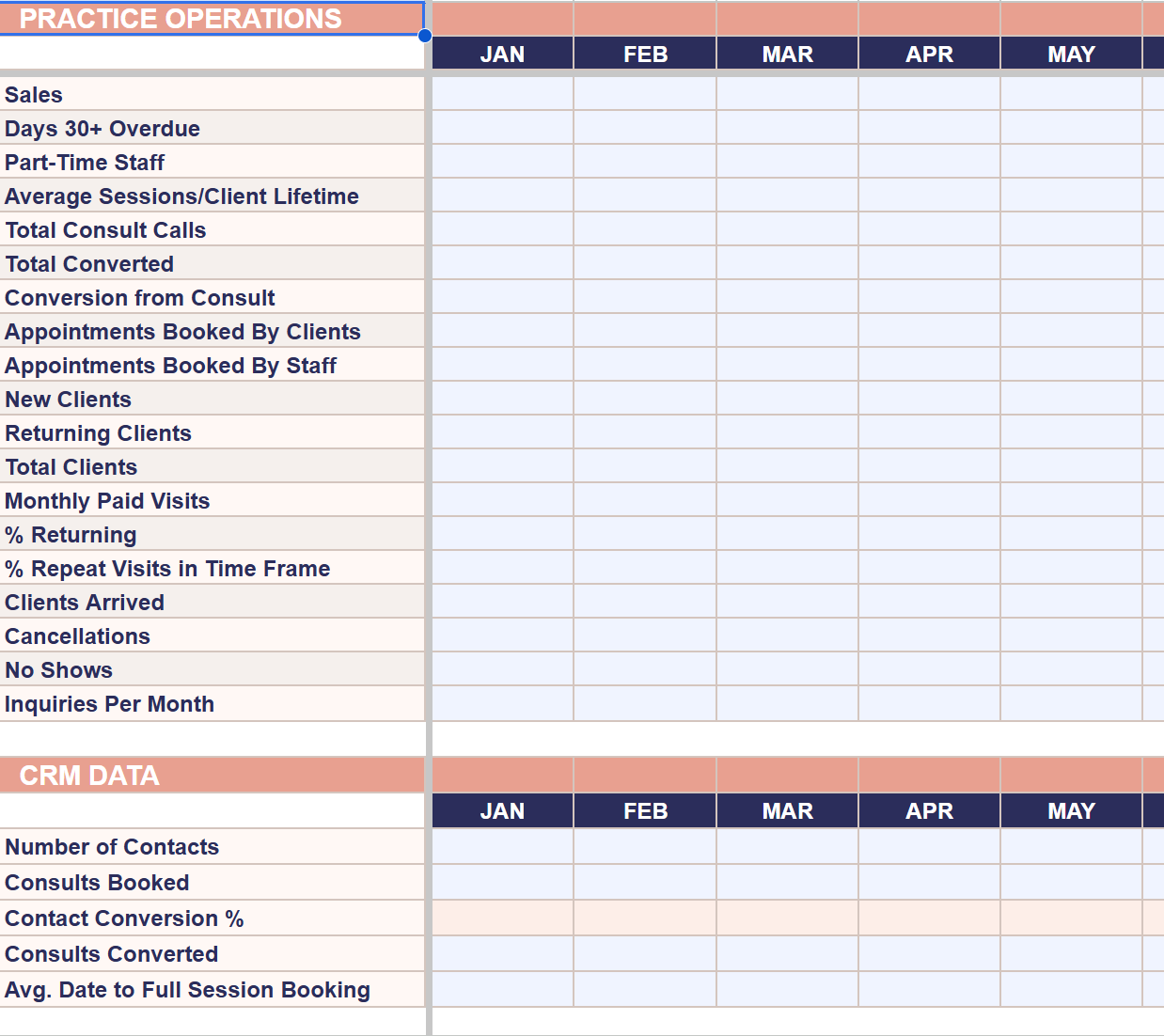
Finally see the full picture of your group practice — without building a dashboard from scratch.
You know you should be tracking your numbers. Revenue, conversion rates, therapist utilization, marketing ROI — the metrics that actually tell you whether your practice is growing or just staying busy. But between running the clinical side, managing a team, and trying to keep your own caseload afloat, who has time to build a tracking system from zero?
This ready-to-use data dashboard gives you a complete, structured system for tracking every metric that matters in a group therapy practice — monthly. No spreadsheet skills required. No expensive software. Just open it, follow the step-by-step instructions, and start entering your numbers.
What's inside:
Practice Data tab — Track monthly sales, consult calls, conversion rates, new vs. returning clients, cancellations, no-shows, CRM data, sales breakdown by service type, and referral sources. Totals and conversion percentages calculate automatically.
Marketing Data tab — Google Search Console metrics (clicks, impressions, CTR, search ranking), website analytics (visits, bounce rate, traffic sources), social media performance (Instagram, Facebook), and return on ad spend. Everything in one view.
Therapist Data tab — Individual performance tracking for up to 10 therapists: sessions per month, client lifetime averages, consult conversions, utilization rates, and overdue notes. Averages auto-calculate as you add months.
Weekly Sales Data tab — Granular weekly tracking for sales, consults, first visits, no-shows, and session counts. 52 rows pre-formatted for the full year.
Auto-Populating Charts tab — Five visual charts (monthly revenue, new clients, consult volume, website traffic, cancellations & no-shows) that build themselves as you enter data. Ready to drop into quarterly presentations.
Instructions tab — A complete, plain-language guide that tells you exactly where to find each number in your practice management system and how to enter it. No guesswork.
Built for the first of every month. The dashboard is designed around a simple monthly ritual: pull the previous month's numbers from your PMS (Jane, SimplePractice, etc.), your website analytics, and your Google Search Console — then enter them into the dashboard. The charts update. The trends emerge. And you have the data you need for quarterly reviews, strategic planning, and year-end presentations.
Who this is for:
This is for group practice owners who know they need to be tracking data but haven't had time to build the system. Whether you're running a 3-person practice or a 15-clinician team, this dashboard scales with you. It's especially useful if you're using Jane App, but the metrics and structure work with any practice management system.
Designed by a group practice owner who built this system for her own 9-clinician practice — and used the data to grow from startup to 300+ sessions per month.
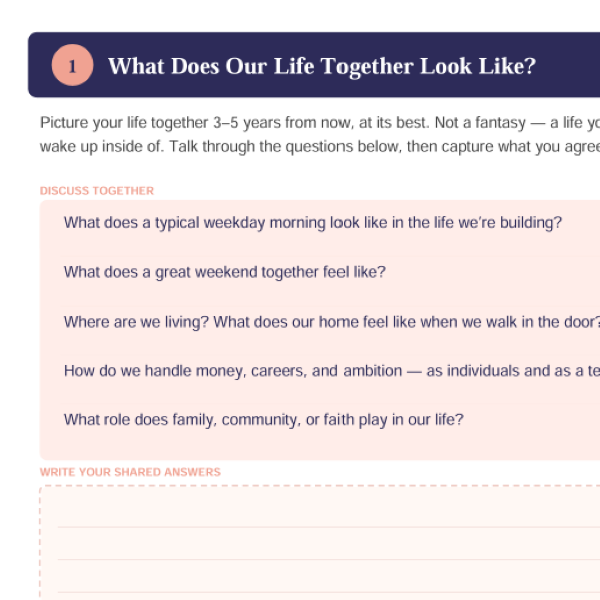
A structured, print-ready exercise that gives your couples a clear shared vision — in one 30-minute session.
You know the couples who come in every week working on communication, conflict, repair — but have never actually articulated what they're building together? This exercise gives them that conversation. It moves couples from vague intentions to a concrete, co-written vision statement they can reference between sessions and beyond.
No therapist facilitation guide needed. The prompts do the heavy lifting. Hand it to a couple as a between-session assignment, use it as a session warm-up, or build it into your intake process as a baseline for treatment goals. It's designed to stand alone — your clients don't need you in the room to complete it.
What's inside:
4 guided sections with discussion prompts and shared writing space
A co-written shared vision statement template with signature lines
Designed for couples to complete independently in one 30-minute sitting
Clean, professionally designed PDF — print or use digitally
Grounded in PACT secure functioning, EFT attachment needs, and Gottman's shared meaning framework
The four sections:
1. What does our life together look like? — Daily life, home, finances, community, and family 3–5 years out.
2. What do we want to achieve together? — Shared goals, milestones, and the commitments they've been avoiding.
3. What is the purpose of this relationship? — The anchor question. What this partnership is for when things get hard.
4. How will we make this real? — This-week behaviour changes, pattern interrupts, a check-in rhythm, and a repair signal.
Works well for:
Couples in the maintenance or growth phase of therapy who need forward-looking structure
Premarital work — gives couples a tangible artifact before they walk down the aisle
Post-crisis couples who've done the repair and need to rebuild shared direction
Intake or early-stage assessment — surfaces values alignment and goal discrepancies fast
Therapists building a resource library of between-session tools
No visible therapeutic framing in the exercise itself — it's written directly to the couple in warm, accessible language. Your clients won't feel like they're filling out a clinical form.
Created by Michelle Garraway, MSW, RSW — founder of The Relationship Agency, a group therapy practice specializing in couples work. Level 2 PACT clinician and PACT continuing education instructor at Wilfrid Laurier University.
Resources, Tools, and Worksheets
-
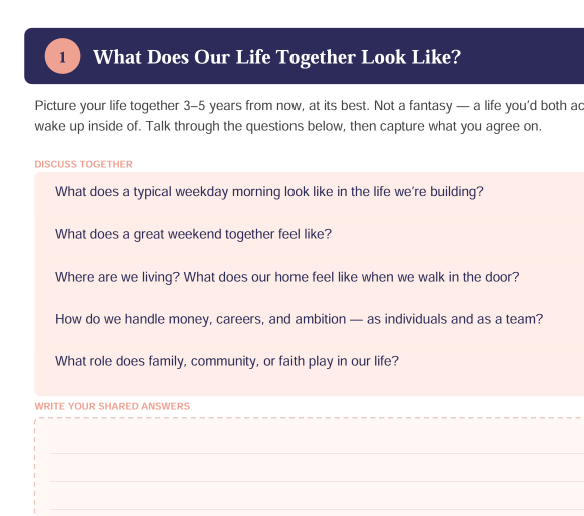
Our Shared Vision: Building the Future Together
Beautifully formatted PDF you can print or fill in digitally
Get on the same page about the future you're building together — in 30 minutes.This guided written exercise gives you and your partner a clear, structured way to have that conversation.
What's inside:
4 guided sections with discussion prompts and space to write your answers together
A shared vision statement template you co-write, sign, and keep
Designed to complete in one 30-minute sitting — no homework, no multi-week commitment
Informed by PACT, EFT, and the Gottman Method's shared meaning research